
Revealed: Britain’s Bike Storage Problem
15 April 2026
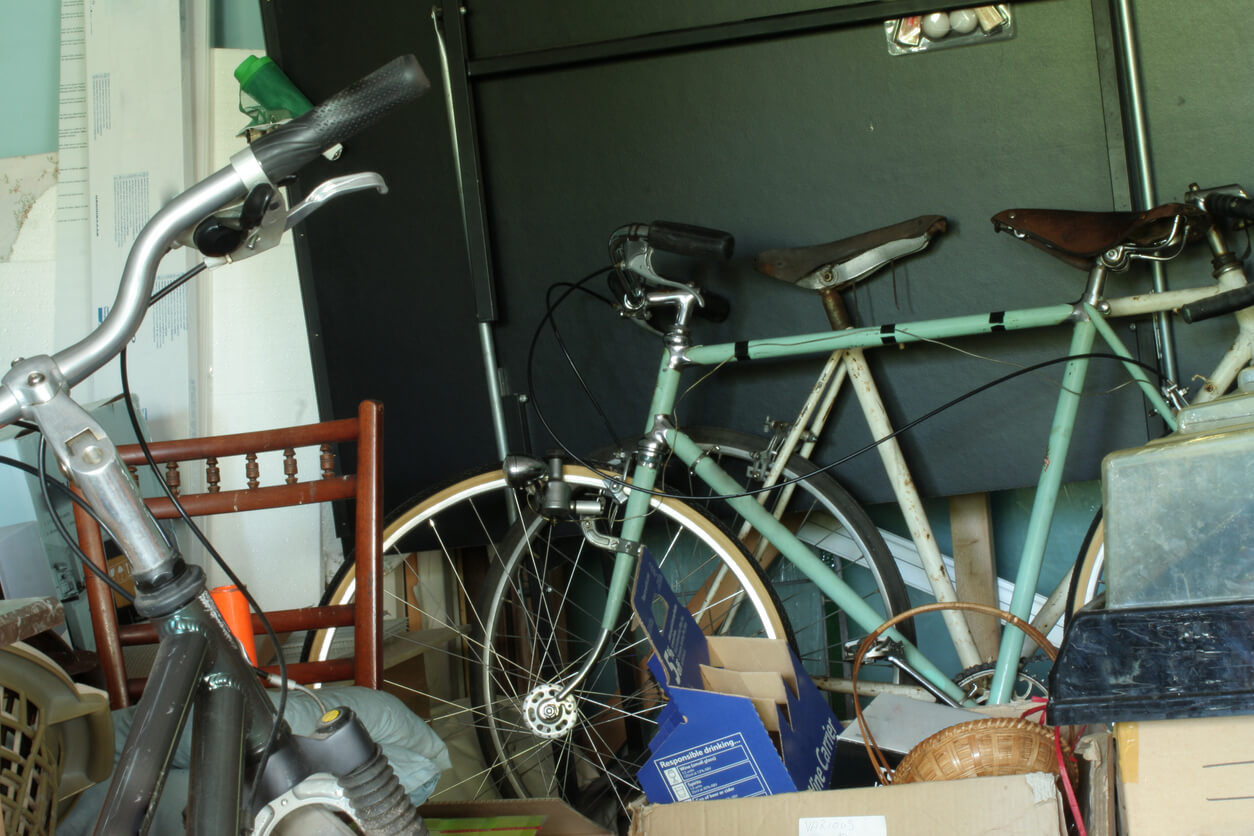
Many people think of cycling as a simple and cost-efficient way to get around. But owning a bike is only part of the story. The other challenge starts when the ride is over: where do you actually keep it?
For many UK bike owners, storage is shaping everything from what kind of bike they buy to how often they ride. While secure sheds and garages remain the ideal for many, the reality is often less straightforward. Bikes are ending up in hallways, bedrooms and main living spaces because riders do not feel confident storing them elsewhere.
At the same time, concerns don't stop at the front door. Worries about where to leave a bike during the day, especially at train stations and transport hubs, are also discouraging people from cycling more often.
To understand how storage affects everyday cycling, we surveyed 945 UK bike owners and riders about where their bikes are kept, how suitable their homes feel, and whether storage worries are changing the way they buy, use and think about bikes.
The findings suggest that for many households, the UK’s housing stock and public bike storage options are still not keeping up with modern bike ownership.
Key findings
- 23% keep their main bike inside the main living space overnight
- 64% say their home is very or fairly suitable for storing bikes, but 26% say it is not very or not at all suitable
- 66% say the main reason their bike is stored where it is is security or a lack of anywhere else suitable
- 64% have regularly or occasionally kept a bike inside their living space because they did not feel comfortable storing it elsewhere
- 42% say bike storage has caused clutter, inconvenience or tension at home
- 41% have delayed buying an additional or more expensive bike because they were unsure where to keep it
- 72% say worries about where to leave their bike during the day have put them off cycling more often
- Just 15% trust bike storage at train stations or transport hubs, while 54% do not trust it much or at all
- Among e-bike users, 58% say owning or using an e-bike has changed where or how they store a bike at home, and 71% say they give more thought to e-bike storage than standard bike storage
- One in four keep their bike inside the home
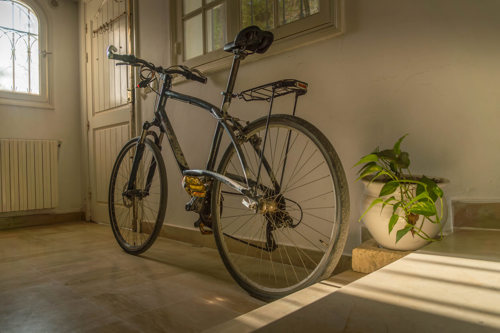
The clearest sign that bike storage is not a minor issue is where people are actually keeping their bikes overnight.
More than one in five respondents, 23%, say their main bike is usually kept inside the main living space, such as a lounge, hallway, kitchen or bedroom. Only 16% mainly use a private garage, while 28% use a private shed or outbuilding.
That means a sizeable share of riders are not storing bikes in purpose-built or clearly separate spaces. Instead, bikes are ending up in the day-to-day footprint of the home.
That picture becomes even stronger among people who live in flats. In that group, 48% say their main bike is kept inside the main living space overnight. Among London residents, the figure is 37%.
This suggests the pressure is even more visible where homes are smaller, storage is more limited, or dedicated outdoor space is less common.
Bike owners store indoors because they do not feel comfortable doing so elsewhere
It is one thing to store a bike indoors by choice. It is another to do it because the alternatives do not feel secure or suitable.
Across our survey respondents, 39% say they have regularly kept a bike inside their main living space because they did not feel comfortable storing it elsewhere, and another 25% say they have done so occasionally. Combined, that means 64% have brought bikes indoors for this reason at least some of the time.
This points to a gap between ideal storage and trusted storage. People may have somewhere else they could leave a bike, but not somewhere they feel good about using.
Among people who live in flats, 64% say they have regularly or occasionally brought a bike indoors because they did not feel comfortable storing it elsewhere. Among London residents, that rises to 62%.
Security matters more than convenience
When asked why their bike is stored where it is, more than half of respondents, 53%, say it is because that is the most secure option available. A further 20% say there is nowhere else suitable to keep it.
Together, that means 72% are storing their bike where they do primarily because of security concerns or a lack of suitable alternatives. By comparison, just 16% say the main reason is convenience.
This is an important distinction. It suggests many households are not arranging their bikes around what works best for everyday life, but around what feels least risky.
Among people who live in flats, 53% say security is the main reason, while 20% say there is nowhere else suitable. Among London residents, 55% say security is the main reason.
Bike storage is causing clutter and tension at home
For some households, bike storage affects how their home feels and functions.
Overall, 14% say bike storage has caused clutter, inconvenience or tension often, while 28% say it has happened sometimes. Combined, that is 42%.
That means more than two in five respondents have felt some domestic friction around where bikes are kept.
The “where” question helps explain why. Respondents say they regularly store bikes in spaces like the hallway, living room, kitchen or bedroom, rather than only in garages, sheds or outbuildings.
For those that live in flats:
- 29% regularly store bikes in the hallway
13% regularly store bikes in the living room
16% regularly store bikes in the bedroom
Among London residents, 46% say bike storage has caused clutter, inconvenience or tension at home. That makes the capital a strong supporting example of how housing pressure and bike ownership can collide.
Storage worries are affecting what bikes people buy
Poor or uncertain storage also limits future purchases. Across our survey, 41% said they have delayed buying an additional bike, or a more expensive bike, because they were unsure where to keep it.
This matters because modern bikes are often not low-value purchases. Storage worries can affect whether people feel able to upgrade, add a second bike to the household, or invest in a bike type that better suits commuting, family use or leisure riding.
Among people who live in flats, the effect looks just as clear: 41% say they have delayed buying another or more expensive bike because of uncertainty around storage. Among London residents, 36% say the same.
That suggests the storage question may be shaping not just daily behaviour, but the growth of bike ownership itself.
Homes feel suitable for many bike owners, but not for everyone
Although most respondents do not say their homes are completely unfit for bikes, there is still a clear divide.
Overall, 64% say their home is very or fairly suitable for storing bikes. However, 26% say it is not very or not at all suitable.
Among people who live in flats, the sense of strain is clearer:
- 33% say their home is very suitable
- 28% say it is fairly suitable
- 23% say it is not very suitable
- 7% say it is not at all suitable
Combined, 30% of people who live in flats say their home is not very or not at all suitable for storing bikes. Among London residents, 26% say their home is not very or not at all suitable.
So, while many riders are finding ways to make bike ownership work, the data still points to a substantial group of homes that are not especially well set up for secure, practical storage.
Daytime storage worries are putting people off cycling more often
The storage challenge isn't limited to home.
Across our survey, 31% of people say concerns about where to leave their bike during the day have put them off cycling more often often, and 41% say this has happened sometimes - a total of 72% altogether.
That suggests bike parking worries may be acting as a direct barrier to cycling frequency. In London, 40% say these concerns have put them off cycling more often often, and another 40% say sometimes. Combined, 80% of London residents surveyed say poor confidence in daytime storage has stopped them riding more.
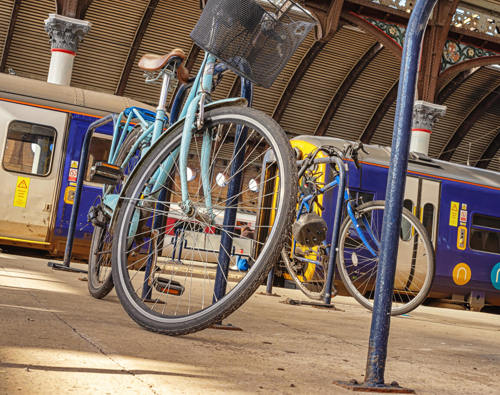
Train stations and transport hubs are a clear weak point
When asked how much they trust bike storage at train stations or transport hubs, confidence is low.
Across the survey:
- 3% completely trust it
- 11% tend to trust it
- 14% neither trust nor distrust it
- 22% do not trust it much
- 32% do not trust it at all
That means just 15% trust station or transport-hub bike storage, while 54% do not trust it much or at all. Ultimately, secure storage at transport hubs is often central to combining cycling with rail, tram or other public transport.
Among London residents, trust is even weaker:
- 2% completely trust it
- 8% tend to trust it
- 28% do not trust it much
- 37% do not trust it at all
So, in the capital, 64% do not trust bike storage at stations or transport hubs much or at all.
E-bikes are adding a new layer to the storage problem
The survey also suggests that e-bikes are making storage decisions more complicated.
Overall, 57% say they currently own or regularly use an e-bike.
Among those respondents:
- 32% say owning or using an e-bike has changed where or how they store a bike at home significantly
- 26% say it has changed it a little
- 55% say they give a lot more thought to where an e-bike is stored
- 15% say they give a little more thought
Combined, 71% say they give more thought to e-bike storage than standard bike storage.
When asked what makes storing an e-bike more complicated:
- 52% say it is heavier to move
- 40% prefer to keep it indoors because of its value
- 35% say charging affects where they keep it
- 31% say it is harder to carry up steps or stairs
- 23% say it takes up more space
This is important because it shows the storage challenge may grow as bike ownership evolves. The rise of heavier, more expensive bikes with charging needs means the question is not only whether homes can store bikes, but whether they can store the bikes people increasingly want to own.
Among London residents who own or use an e-bike, 68% say e-bike ownership has changed where or how they store a bike at home, and 65% say they give a lot more thought to e-bike storage.
Summary
For many of the UK bike owners and riders we polled, there is a clear challenge when it comes to storage at home or at the point they need to leave their bike somewhere else.
The survey findings highlight:
- Home bike storage is often being driven by security rather than convenience
- Many riders are bringing bikes into living spaces because they do not trust other options
- Storage pressures are creating clutter and tension at home
- Uncertainty around storage is delaying purchases
- Poor daytime storage, especially at transport hubs, is putting people off cycling more often
- E-bikes are making storage decisions even more complex
Given that the UK government is promoting an increase in active travel, these findings raise the question: if people do not feel they have a secure place to keep a bike, either at home or away from it, how easy is it really to choose cycling more often?
Where do most people store their bikes at home?
The most common answer in the survey was a private shed or outbuilding, followed by inside the main living space.
Are homes suitable for storing bikes?
Most respondents said their home was very or fairly suitable, but more than a quarter said it was not very or not at all suitable.
Does bike storage affect how often people cycle?
Yes. Nearly three quarters of respondents said worries about where to leave their bike during the day had put them off cycling more often.
Are e-bikes harder to store?
Many respondents said yes, particularly because of weight, value, charging needs, and difficulty carrying them up stairs.
Methodology
Cycleplan surveyed 945 UK bike owners in March 2026 about bike use, household storage, home suitability, trust in storage away from home, and the impact of e-bike ownership on storage decisions.
Please note the information provided on this page should not be taken as advice and has been written as a matter of opinion. For more on insurance cover and policy wording, see our homepage.