
Knee pain while cycling: Causes and prevention
01 May 2026
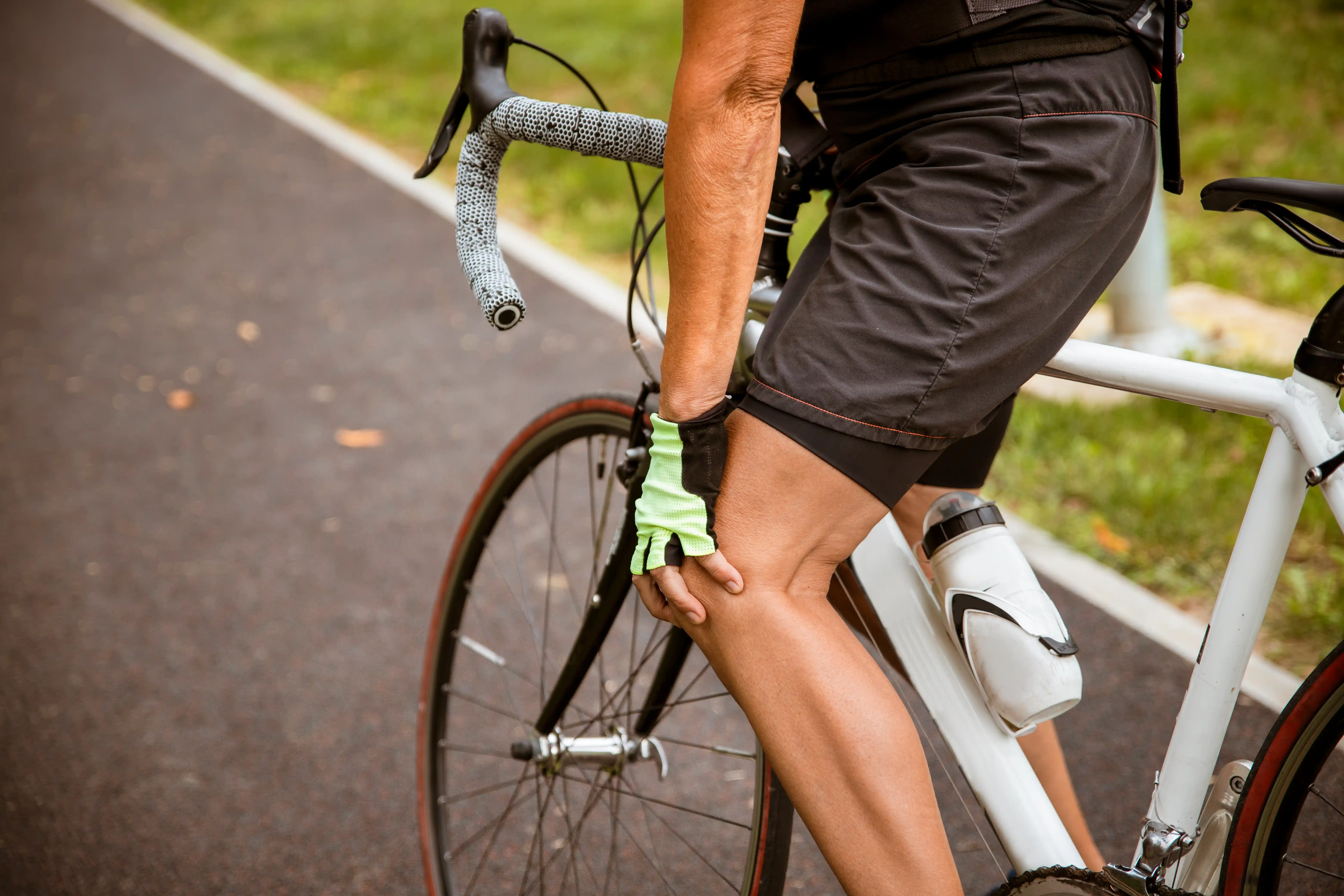
Cycling is an excellent form of exercise, but even though it’s low-impact, it can still cause aches and injuries. Knee pain is one of the most common complaints among cyclists. And it affects riders of all levels, from weekend leisure cyclists and dedicated road racers to off-road aficionados and indoor spin enthusiasts.
Understanding why knee pain happens and the steps you can take to prevent it can help keep you riding comfortably. Here we explain the types of knee pain cycling can lead to, the causes, and what you can do to protect against it.
Why does cycling cause knee pain?
The knee is a complex joint that absorbs force and moves repetitively during pedalling. While cycling is generally kinder on the knees than high-impact sports, a variety of things can put strain on your knee and the surrounding soft tissues. This includes repetitive motion, poor bike fit and seat height, overtraining, or muscle imbalances.
Pain may develop gradually over time. This is due to repeated motions leading to gradual damage. Or it can appear suddenly after an awkward movement, a fall or other accident, or a ride that was too high intensity for your fitness level.
What types of knee pain can cycling cause?
Pain in different areas of your knee can indicate different types of damage caused by various underlying issues:
Front knee pain from cycling
Pain around or behind the kneecap is one of the most common cycling-related complaints. It can be due to one or a combination of:
- General overuse of the knee joint
- A saddle position that’s too low and/or too far forward
- A weakness or imbalance in your quadriceps or hips
- Patellofemoral pain syndrome (PFPS) – lasting, dull, aching pain around the kneecap caused by poor kneecap tracking or overuse
Outside knee pain from cycling
Pain around the outer side of the knee caused by cycling is often associated with irritation of the iliotibial (IT) band. This is a thick band of connective tissue running down the thigh from the hip and into the knee.
Iliotibial band issues can be caused by cycling when:
- Your saddle height is too high
- Your cleats aren’t properly aligned, causing your knee to pull inwards as you pedal
- You increase your training volume or intensity too quickly
Inside knee pain from cycling
Inner knee pain from cycling is usually caused by your knee moving too far inwards as you pedal. This can lead to ligament strain and tendon irritation – most commonly medial collateral ligament (MCL) strain or pes anserinus tendonitis:
The common culprits of this include:
- Your cleats are not properly aligned, causing your heel to angle outwards and pushing your knee inwards
- Your saddle is too low
- Muscle imbalances and weakness, including weak glute muscles, poor core stability, or tight groin muscles
- Increasing your mileage or intensity too quickly leading to soft tissue irritation
Back of the knee pain from cycling
Anterior knee pain from cycling is most often caused by over-extending the legs or overworking the hamstrings and the popliteus muscle at the back of your knee. Back of knee pain from cycling happens most often when:
- Your saddle is too high and/or too far back
- Your cleats are incorrectly aligned, causing your foot to be pushed too far forward
- Muscle tightness in the backs of your legs and calves
- Overtraining
Does knee pain differ by type of cycling?
Different types of cycling may not always consistently lead to different types of knee pain. But each carries certain risks that can cause cycling knee pain:
Knee pain from indoor cycling and spin classes
Indoor cycling typically involves a high repetition of the same movement in a fixed bike position, often with intense intervals and simulated climbs with resistance. This can lead to muscle and soft tissue strains and irritation, especially if your cycling motion isn’t correct.
Because many indoor riders use shared bikes, such as in the gym or a spinning class, a poor setup is common. If the saddle height, handlebar reach, or resistance levels are wrong, strain can build quickly. This can lead to knee issues over repeated sessions.
The best way to avoid knee pain from indoor cycling is to learn how to set the bike up. This will help put you in the right position. Also, avoid increasing your intensity too quickly.
Knee pain from road cycling
As with indoor cycling, road cycling can involve spending long periods in the same position, especially on endurance rides. This can lead to repetitive strain if your bike fit is slightly off. Incorrectly aligned cleats are also a particular risk with road cycling.
If your cleats aren’t properly aligned, it can cause your foot to push the pedals in the wrong position. This can cause your knees to press inwards or outwards, leading to outer or inner knee pain. Or if your foot is too far forward, it can put strain on the back of your knee.
The single best step you can take to avoid knee pain from road cycling is to ensure you know how to properly align your cleats. This will help you pedal without risking soft-tissue injuries.
Knee pain from mountain biking
Mountain biking can involve more sudden movements, rough terrain, and time spent standing on the pedals than other forms of cycling. This can lead to twisting forces in the knee during technical riding, sudden changes in foot placement, and plenty of impacts and jolts. Steep climbs can also place intense demands on your leg muscles and other soft tissues. Falls and acute injuries are also more common in off-road cycling.
Along with making sure your bike is properly set up, the best way to mitigate these risks is to gradually increase the intensity of your off-road cycling. Don’t try to push beyond your skill limit, as this can make falls and injuries more likely.
How do I prevent knee pain from cycling?
Knee pain from cycling isn’t inevitable. There are plenty of steps you can take to protect your knees and the rest of your body, including:
Properly fitting your bike
The most important measure you can take is to ensure your saddle is at the right height and position, and that your handlebars are at the correct distance for you to cycle safely. Whilst you can find a lot of advice and videos online, it can be worthwhile to pay for a professional bike fit to get properly set up.
Properly fitting your cleats
If you wear cycling shoes with cleats, make sure they’re properly aligned so your foot is held in the right position. This can minimise the risk of soft tissue damage.
Increase your training intensity gradually
Avoid sudden increases in distance ridden, ride duration, weekly mileage, hill-session intensity, and resistance.
Whilst it can be tempting to push yourself, especially initially, your body needs time to recover from exertion. If you incrementally increase the intensity of your cycling, you’ll reduce your risk of injury by giving your joints and soft tissues time to adapt.
Build your strength and mobility
As well as gradually increasing the intensity of your cycling, building muscle strength and improving your mobility will also help protect against injuries. Focus on safely training your glutes, core, quadriceps, and hamstrings. Develop an effective stretching routine, with a particular focus on your legs and lower back.
Warm up before cycling properly
Try to begin your rides with some gentle, low-effort cycling for several minutes before you cycle in earnest. This gives your body a chance to warm up before you test it.
Listen to early warning signs
Mild discomfort is easier to address than persistent pain. If something feels wrong, stop and pay attention to it. You’ll likely need to rest and recover. Then adjust what you’re doing, whether that’s your cycling action or intensity, to address the developing issue.
Treating knee pain
If you develop knee pain from cycling, you should consider:
- Reducing or pausing cycling temporarily
- Reviewing bike setup and cleat alignment
- Using ice packs for short periods if swelling is present
- Taking over-the-counter medication – this includes a nonsteroidal anti-inflammatory (NSAIDs), such as ibuprofen, naproxen, or aspirin – to reduce pain and inflammation
- Gentle mobility work if you can do so comfortably
- Returning gradually to cycling once your symptoms improve
However, self-management has limits. If your knee pain persists, you have a particularly painful knee from cycling, or you’re otherwise concerned about it, by far the best course of action you can take is to see a healthcare professional. This could be your GP or a physiotherapist.
Specialist cycling insurance through Cycleplan
As well as your knees, it’s important to protect your bike and equipment with specialist cycling insurance.
Specialist cycling insurance through Cycleplan helps to provide cover if your bike is lost, damaged or stolen. Find out more about specialist cycling insurance or get a quick online quote today.
Please note the information provided on this page should not be taken as advice and has been written as a matter of opinion. For more on insurance cover and policy wording, see our homepage.