
How to measure a bike frame?
03 February 2026

Whether you’re buying a new bike, checking the fit of a second-hand option, or simply trying to understand your current setup, knowing how to measure a bike frame can improve comfort, performance, and control while cycling.
With different types of bikes, size guides, and manufacturer guidelines to consider, measuring a bike frame can feel confusing at first, but it’s definitely something you can do. In this guide, we explain how to do it and outline the key measurements. We’ll also share bike frame size guides and top tips to help you find the right bike for you.
The importance of getting the right sized bike frame
Having the right sized bike frame is important as it affects comfort, performance, efficiency, and safety when you’re out riding.
When your bike frame is the right size, you’ll find you can easily maintain a natural position which reduces strain on your back, neck, shoulders, and hips. The wrong-sized bike frame can lead to discomfort and even long-term injuries, as your posture will be all wrong. You might also find that you overextend.
Measuring your bike frame and opting for the correct size will also help boost your cycling performance. Your rides will be smooth and controlled, as you’ll be seated in the right position. It will also improve your efficiency and prevent energy waste. Plus, it allows for safer cycling as you’ll have more control and feel stable and balanced.
How do you measure the frame size on a bike
You’ll need to account for the following:
Things you need to measure a bike frame
You don’t need much equipment to accurately measure a bike frame, but using the right tools will make your measurements far more reliable.
Tape measure – You’ll need a flexible or metal tape measure that measures in centimetres and inches, as bike frames use both. This will be used to measure the seat tube length, top tube length, and stand over height.
Spirit level – A spirit level helps to measure the top tube on sloping frames. Place it horizontally from the head tube to the seat tube to get an accurate reach measurement.
Flat surface – Your bike should be on a flat surface as this will ensure you avoid incorrect measurements. Using a bike stand is ideal for this, but leaning it against a wall also works.
Pen and paper – Use these, or the notes app on your phone, to record the bike frame measurements you take, especially if you’re comparing bikes or checking manufacturer geometry charts.
Plumb line – While not essential, a plumb line can help with vertical measurements like stand over height or checking alignment. A piece of string with a small weight on the end works well as a plumb line.
Manufacturer geometry chart – This chart allows you to compare your bike frame measurements with manufacturer specifications and confirm whether the frame is measured centre-to-centre or centre-to-top.
Measurements to take
1. Seat tube length – This is the most common way a bike frame size is measured. Find the centre of the bottom bracket at the axle where the pedals attach and measure in a straight line up to the top of the seat tube. For some older or road bike frames, measure to the centre of the top tube instead.
2. Top tube length – This is the horizontal distance from the head tube to the seat tube and is especially important on compact frames and modern bikes where seat tubes slope. This measurement is often used alongside seat tube length to determine the right fit.
3. Stand over height – Measure the distance from the ground to the top tube. When you’re standing over the bike, a road bike should have 1cm to 2cm clearance and a mountain bike should have 5cm to 10cm clearance. This will ensure you can stop and dismount safely.
Bike frame size guide
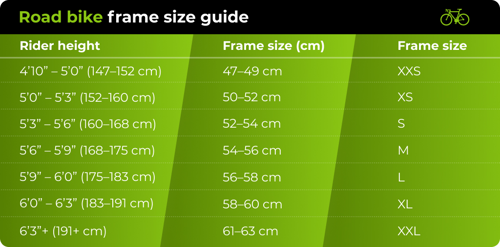
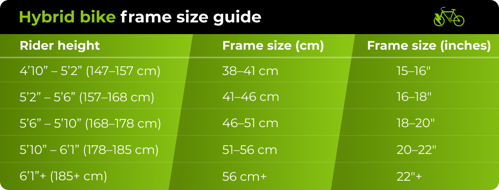
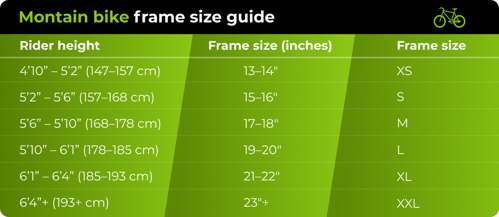
Below you’ll see general bike frame size guides for road, hybrid, and mountain bikes. These sizes are guidelines only and different bike manufacturers may vary. When choosing the right bike frame size, keep in mind that:
- Riders with long legs or torsos may need to size up or down
- Modern bikes may use S/M/L sizing instead of centimetres or inches
- A professional bike fit is recommended for frequent or long-distance riding
- If you’re between sizes, you should choose a smaller bike frame for agility and control or a larger option for comfort and stability
Road bike frame size guide
Hybrid bike frame size guide
Mountain bike frame size guide
Things to consider when measuring a bike frame
When measuring a bike frame, it’s not just the number on the tape measure that matters. Bike frame size affects comfort, control, and efficiency, and there are many things to consider when measuring yours.
1. Bike type
Road, mountain, and hybrid bikes are measured differently, so bike type is an important consideration. Road bikes are usually measured in centimetres, mountain bikes often use inches or S/M/L sizing, and hybrid bikes can be measured either way, depending on the manufacturer.
2. Seat tube measurement
Some manufacturers measure their bike frames from the centre of the bottom bracket to the top of the seat tube, while others measure to the centre of the top tube. Always check how the manufacturer defines frame size to help you find the right fit.
3. Top tube length
Top tube length can be more important than seat tube length as it affects how stretched or upright you feel on the bike. This bike frame measurement is especially important on compact or sloping frames.
4. Standover height
You should have enough clearance when standing over your bike as this will help you to stop safely with confidence. Road bikes require minimal clearance whereas mountain bikes need more clearance due to the varying terrain you ride them on.
5. Rider measurements
Knowing just your height isn’t enough when identifying the right bike frame measurements for you, and two cyclists of the same height might need different frame sizes. You’ll also need to know your inseam length, torso length, and arm length.
6. Manufacturer differences
A medium-sized bike frame from one manufacturer can feel very different to a medium option from another, so you should always compare geometry charts and try not to rely on size charts.
7. Adjustability
While seat height, stem length, and handlebars can be adjusted, a poorly sized frame won’t necessarily be suitable after these adjustments. This is why measuring a bike frame is so important when finding the right fit.
8. Intended use
How you plan to use your bike now and in the future can affect the frame size you need. Consider whether you’ll use the bike for long-distance rides, commuting, or off-road riding and account for this when taking measurements.
Specialist cycling insurance through Cycleplan
Once you’ve found the right bike fit for you, you may want to consider financially protecting your bike and its accessories with specialist cycling insurance.
Specialist cycling insurance through Cycleplan provides cover if your bike is lost, damaged or stolen.
Find out more about specialist cycling insurance or get a quick online quote today.
Please note the information provided on this page should not be taken as advice and has been written as a matter of opinion. For more on insurance cover and policy wording, see our homepage.