
How to clean a bike chain
02 December 2025
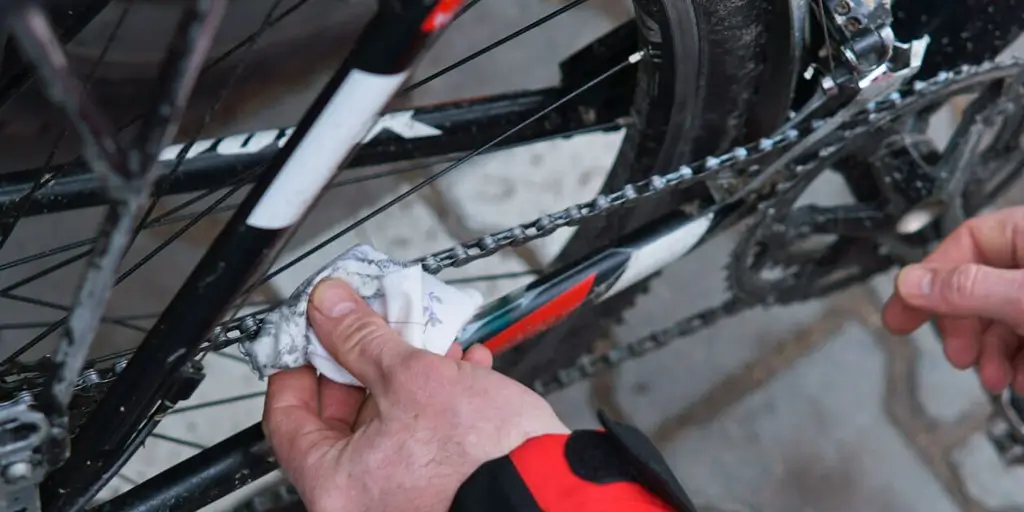
Yes – a clean bike chain is easy on the eye, but some cyclists (especially beginners) often forget that keeping a clean bike chain also helps your whole bike perform better and run more smoothly for longer.
Regularly cleaning your bike chain will also keep grease stains to a minimum – so while it can be a messy task, it’s worth your time and effort for many reasons.
But if you’re new to cycling or have just bought a new bike, cleaning its chain can be confusing if you’re doing it for the first time.
Read on for our simple, six-step guide on how to clean a bike chain.
How do you clean a bicycle chain?
1. Pick your cleaning product and scrubber
Before you delve into the details of cleaning your bike chain, the first step is to select your cleaning product.
Bike chains can be cleaned using regular soap, such as washing up liquid, or your local bike shop will sell bike-specific degreaser.
Don’t worry too much about splashing out on fancy products because shop-bought washing-up liquid works fine most of the time.
The same goes for your scrubber. While there are specially made bike brushes on the market, something as simple as an old toothbrush can do the job.
Old washing-up brushes are suitable for cleaning chains, too – but make sure whatever you use has bristles that are long enough.
2. Start with the cassette
If you didn’t already know, your bike’s cassette is the cluster of cogs found attached to the back tyre.
To clean the cassette, shift your gears appropriately so that the chain sits on one end. Then, apply your cleaning product or degreaser to your scrubber, and get to work on the cogs – except for the one holding the chain.
Once you’re happy, move your chain down to the other end of the cassette and scrub the remaining cogs until they are clean.
3. Clean the chainring
Now that the cassette is clean, it’s time to focus on your bike’s chainring.
To do this, you might find it easier to completely drop your chain off the ring, giving you a better view.
As with step two, apply your cleaning product or degreaser to the scrubber and scrub around the perimeter of the ring until you’re satisfied.
It’s as simple as that.
4. Clean the chain itself
Next, you can proceed to clean the chain itself.
If your bike has more than one chainring, you can put the chain onto the largest one for this step.
Apply a generous amount of your cleaning product or degreaser to the scrubber and begin scrubbing, using the chainring to apply pressure.
With your bike upended, you can use one hand on the foot pedals to turn the wheels and thus the chain. Using your other hand, hold the brush still on the surface of the chain, allowing it to run through the bristles continuously.
For an even deeper clean, you can also fill a container with cleaning product, detach the chain completely from your bike, and soak it in the container. Then, give the container a shake and let it sit for up to 20 minutes before removing the chain and reattaching it to the chainring.
5. Rinse off and leave to dry
Once everything has been thoroughly scrubbed, gently rinse the entire section of your bike with clean water, taking a gentle approach.
Avoid using high-pressure hoses or jet washers, as these can blast water into unwanted areas. You only need to rinse the places you’ve just cleaned – if you’re not careful, unnecessary water elsewhere can lead to rusting.
After rinsing, you should let your chain dry off as much as possible before continuing. Storing your bike while wet is another common cause of rusting.
6. Reapply chain lube
Now the chain is dry, it’s time for the final step – and it’s all about the lubricant.
Slowly back-pedal while applying a gentle, consistent stream of lube over the chain. You can do this either directly from the lube bottle or via your scrubber.
For optimal results, apply the lube to the top of the lower chain link while it turns, ensuring complete coverage of every link.
Ideally, you want the lube to get in between the rollers and plates rather than accumulating an excess on the chain’s outer edge.
Leave the lube to soak in for a few minutes, and then use a clean cloth to remove the excess. You might be inclined to think that the more lube, the better – but excess lube can actually attract dirt onto your chain.
How often you clean your bike chain depends on how frequently you ride and the type of terrain you typically ride on. However, aim for a clean at least once a month as a general rule.
Specialist cycling insurance through Cycleplan
Now you know how to clean a bike chain, you’re ready to tackle the trails – but you might also want to make sure you have bike insurance.
Specialist bike insurance protects you from injury or claims that might be made against you and your bike in the event of theft, damages, or if it’s stolen (providing you report it to the police within 24 hours).
Get an instant online quote today.
Please note the information provided on this page should not be taken as advice and has been written as a matter of opinion. For more on insurance cover and policy wording, see our homepage.