
Your guide to bike tyre pressure
24 February 2026
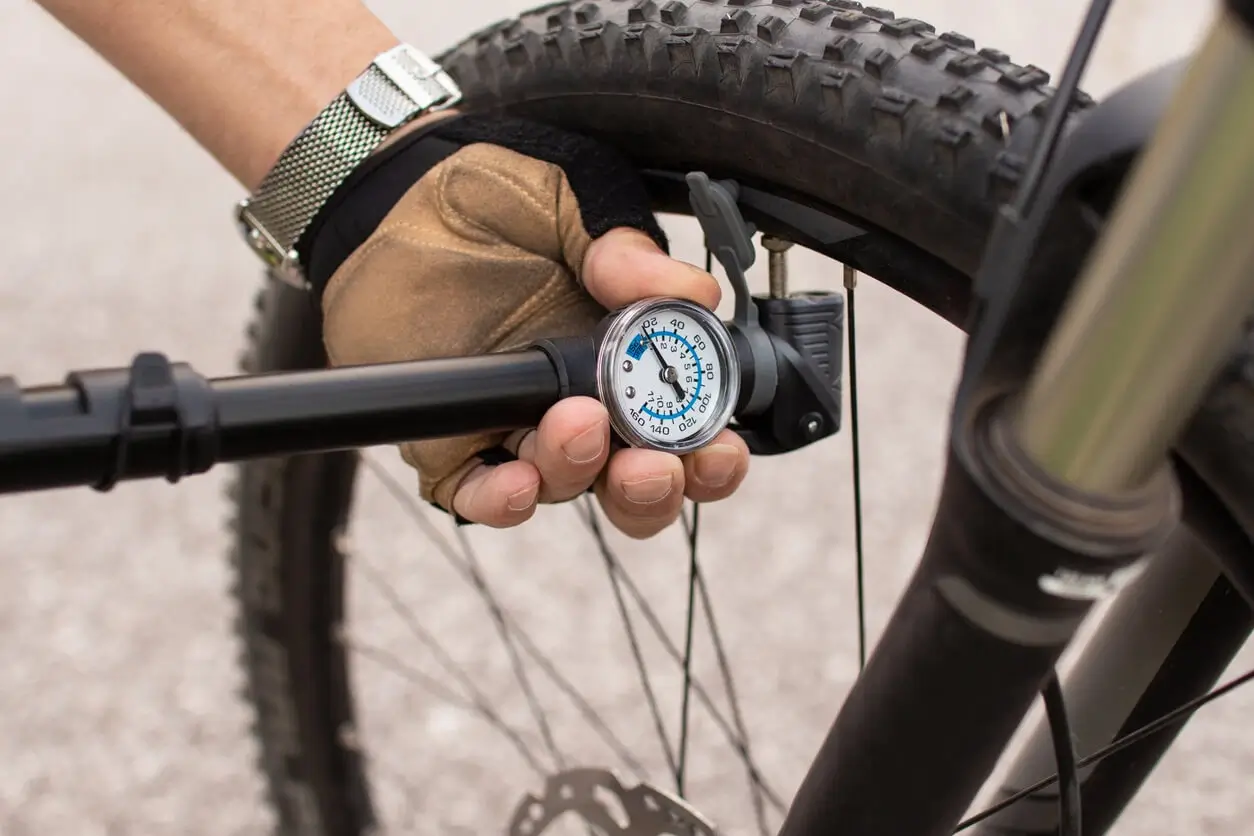
Getting your bike tyre pressure right is one of the simplest ways to improve your ride. The correct PSI affects everything from speed and comfort to grip and puncture resistance. Whether you’re commuting, exercising or training for an event, maintaining proper tyre pressure helps you ride more efficiently and safely.
In this guide, we explain why bike tyre pressure matters and discuss how it impacts cycling performance. We’ll also share a quick, easy way to check and adjust your PSI before every ride.
The importance of bike tyre pressure
Ensuring you have the right bike tyre pressure is important for a range of reasons, including performance, safety, and comfort. Properly inflated tyres reduce rolling resistance, allowing you to ride faster and more efficiently with less effort. When tyre pressure is too low, your bike will feel slow, and you’ll need to use more energy to pedal. Overinflated tyres can also cause issues as they’ll make the ride harsh and uncomfortable while reducing traction and control, especially on uneven surfaces.
Correct tyre pressure also improves safety. Underinflated tyres are more prone to punctures, pinch flats, and sidewall damage. They can also negatively affect handling and make cornering less stable. The right bike tyre pressure ensures better grip on the road, helping you to brake effectively and ride confidently in different conditions.
Cycling with the recommended tyre pressure can also extend tyre lifespan by reducing the likelihood of uneven wear, also helping you to save money on replacements. Regularly checking your bike tyre pressure is a great habit to get into as it results in great performance, comfort, durability, and safety every time you cycle.
How to check bike tyre pressure
To check your bike tyre pressure, start by locating the valve on your tyre. Most bikes use either a Schrader valve, which is similar to those found on car tyres, or a Presta valve, which is slimmer with a small locking nut at the top. Remove the valve cap and, if it’s a Presta valve, unscrew the small nut to open it.
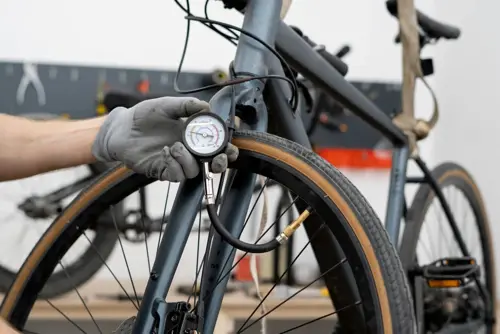
Next, use a reliable pressure gauge or a bike pump with a built-in gauge. Attach the pump head firmly to the valve to prevent air from escaping. Read the pressure displayed on the gauge and compare it to the recommended PSI range. This is usually printed on the sidewall of the bike tyre. If the pressure is low, inflate the tyre to the correct level. If it’s too high, gently press the valve to release small amounts of air.
Finally, remove the pump carefully and replace the valve cap.
In addition to your tyre pump, discover the must-have essentials for every bike ride.
Tyre pressures for road, mountain, and hybrid bikes
Tyre pressure varies significantly between road, mountain, and hybrid bikes because each is designed for different terrain, speed, and comfort needs. Choosing the correct pressure improves grip, efficiency, and safety.
Road bikes
Road bikes use narrow tyres built for smooth pavement and speed. Typical pressure ranges from 80 to 130 PSI, depending on rider weight and tyre width. Higher pressure reduces rolling resistance, allowing faster riding with less effort. As road surfaces are generally smooth, less cushioning is required, and firmer tyres improve your bike's efficiency and responsiveness.
Mountain bikes
Mountain bikes have wider tyres designed for trails, rocks, mud, and uneven terrain. Recommended pressure is usually 18 to 35 PSI. Lower pressure increases the tyre’s contact area with the ground, improving traction, shock absorption, and control on rough surfaces. Softer tyres also reduce bouncing and help maintain grip when cycling over obstacles.
Hybrid bikes
Hybrid bikes boast a combination of road and off-road capabilities. Their tyre pressure typically falls between 40 and 70 PSI. This middle range balances comfort and efficiency, making hybrids suitable for city streets, bike paths, and light gravel.
The differences in pressure across different bike types are due to tyre width, riding surface, speed requirements, and comfort needs.
What is the correct tyre pressure for my bike?
The correct bike tyre pressure depends on your bike type, tyre width, rider weight, and terrain. As a general guide:
- Road bikes – 80 to 130 PSI
- Mountain bikes – 25 to 50 PSI
- Hybrid bikes – 40 to 70 PSI
- Gravel bikes – 35 to 60 PSI
Always check the recommended PSI range printed on your bike tyre’s sidewall. Staying within this range helps prevent punctures, improves comfort, and ensures optimal performance.
How do I know what PSI my bike tyres should be?
To find the right PSI for your bike tyres:
- Check the tyre sidewall for the manufacturer’s recommended PSI range
- Consider your body weight, as heavier riders may need slightly higher PSI
- Adjust for terrain, as you’ll need a lower PSI for off-road grip and a higher PSI for smooth pavement
- Use a reliable floor pump with a pressure gauge for accuracy
If you ride a road bike, you’ll typically use higher pressures for speed on smooth roads. For trail riding, lower pressures improve traction and control.
Is 40 PSI too much for a bike tyre?
Whether 40 PSI is too much depends on the type of bike you have:
- For most mountain bikes, 40 PSI is usually at the high end of the recommended range
- For hybrid bikes, 40 PSI is often within the recommended tyre pressure range
- For road bikes, a tyre pressure of 40 PSI is typically too low
Always compare 40 PSI with your tyre’s recommended range. Overinflating can cause an uncomfortable ride and increased risk of blowouts, while underinflating can lead to pinch flats and poor efficiency.
Should I inflate my bike tyres to the maximum PSI?
Inflating your bike tyres to the maximum PSI printed on their sidewall is not always the best idea. The maximum PSI is the upper safety limit and not necessarily the optimal pressure for comfort and performance.
Many cyclists find better grip and comfort by staying slightly below the maximum PSI, especially on rough surfaces. When confident, you can carefully adjust your bike tyre pressure based on road conditions, weather, and rider weight.
How often should I check my bike tyre pressure?
You should aim to check your bike tyre pressure:
- Before every ride, if you have a road bike
- At least once a week if you’re a casual rider
- After long periods of storage
Bike tyres naturally lose air over time, especially high-pressure road tyres. Regular pressure checks improve safety, reduce the risk of punctures, and extend tyre lifespan.
Specialist cycling insurance through Cycleplan
Now you know all about bike tyre pressures, why it’s important, and how to check pressure, you may want to consider financially protecting your bike and its accessories with specialist cycling insurance. Get a quote online.
Please note the information provided on this page should not be taken as advice and has been written as a matter of opinion. For more on insurance cover and policy wording, see our homepage.