Autumn and winter cycling safety tips
28 October 2026
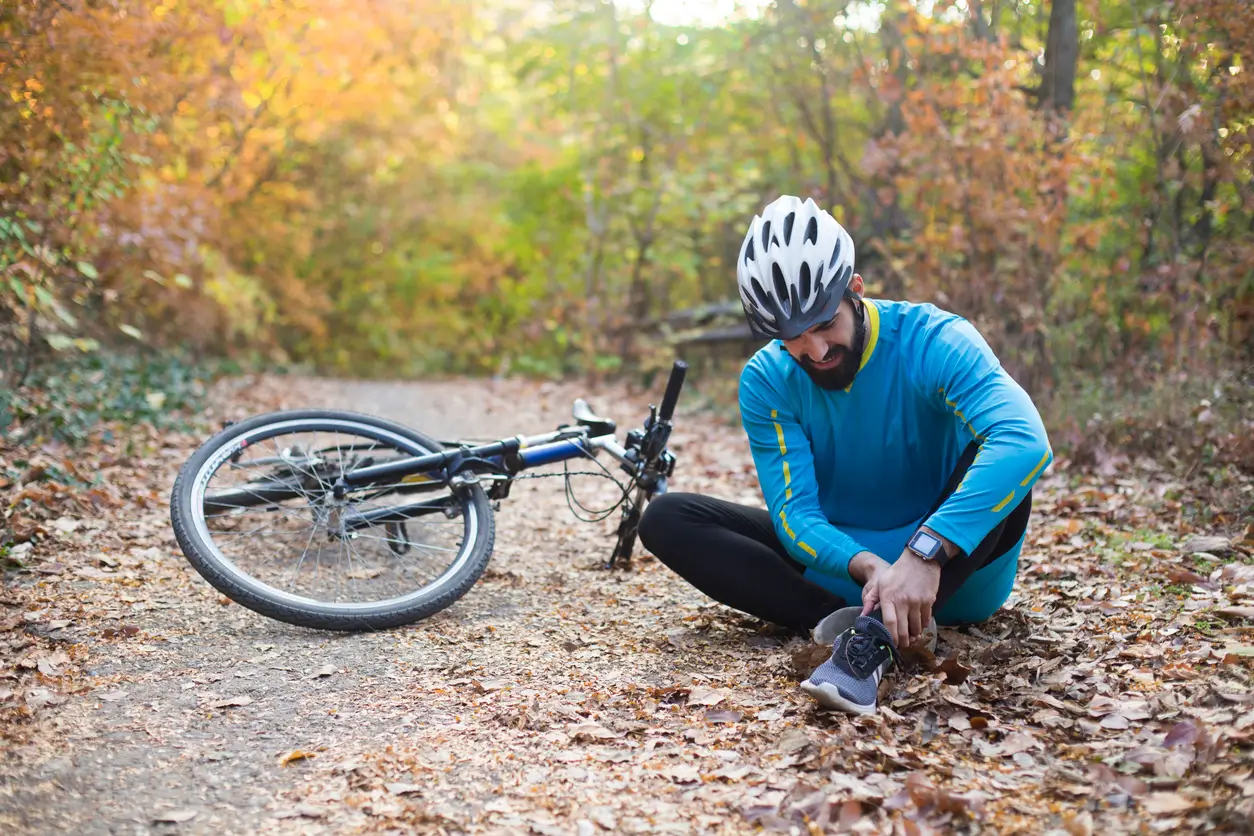
The route to work might be the same, but riding it in November can feel very different from riding it in June. Leaves collect on corners, rain leaves puddles across the road, and an early start may mean setting off in freezing conditions.
Our 2025 claims data reflects that seasonal shift, with weather-related incidents around 86% higher in autumn and winter than in spring and summer, despite fewer claims overall. Read on below to learn how best to prepare for your cycling trips in autumn and winter.
Watch for changes in the road surface
The rain may have stopped by the time you leave home. That doesn’t mean the road has dried out. Puddles, wet leaves and slippery covers can still be waiting along an otherwise familiar route
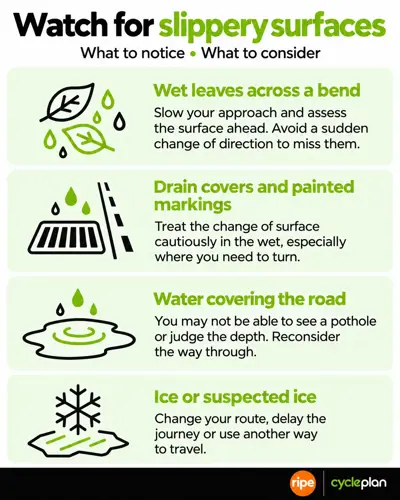
Cycleplan’s infographic highlights four slippery road hazards. Slow down before wet leaves and avoid sudden changes of direction. Take care on wet drain covers and painted markings, especially when turning. Standing water can hide potholes and make depth difficult to judge, so reconsider the route through. If you suspect ice, change your route, delay the ride or use another form of transport.
Wet leaves, drain covers and painted markings can lead to slips and falls when cycling in Winter
A covering of leaves makes it harder to see what you’re riding over. When wet, the leaves themselves can be slippery, with potholes or other damage hidden underneath. Take particular care on corners, where you may already be braking or turning.
Cycling UK’s autumn riding guidance recommends avoiding wet leaves where it is safe to do so. There is a balance to strike here: suddenly swerving away from a patch could put you in the path of traffic.
Watch for drain covers and painted markings too. A metal cover at the entrance to a roundabout, for example, might be right on your usual line through the turn. Spotting it on the approach gives you more time to respond than noticing it just as your wheel reaches it.
Ice and black ice are difficult to spot when cycling and can cause skidding
Suspect ice on your route? It may be a day to leave the bike at home, delay the ride or choose another way to travel.
The Met Office’s icy cycling guidance, provided by Cycling UK, draws attention to frozen water and hazardous road edges after rain followed by a freeze. Black ice is particularly difficult to spot. A clear-looking stretch of road can still be slippery.
For a weekend ride, postponing until another day may be straightforward. A commute takes a little more planning, so check your alternatives before the morning arrives. Warmer clothing and adjustments to an ordinary road bike won’t make an icy route reliably safe.
Adjust your cycling for wet conditions
Reduce your speed and give yourself more room to stop when cycling in wet weather. Keep braking and steering smooth, and approach bends at a pace that suits the conditions.
Allow more time for a wet commute. Trying to make up a few minutes on the way to work adds pressure just when you need to take things more slowly. The journey that takes half an hour in summer may need longer today.
Cycling UK’s guide to riding in the rain advises taking corners more slowly and braking carefully. It also warns against riding through puddles when you cannot see what lies beneath them.
And if the roads turn out to be worse than expected, you can still change your mind. Stop somewhere safe and work out another way home rather than pressing on through conditions you’re uncomfortable with.
Check the forecast and rethink your route before getting on your bike
It’s easy to check the weather for the ride out and forget about getting back. If you commute, check the forecast for when you’ll leave work as well. A mild lunchtime tells you very little about an early start or a late finish.
The Met Office’s winter preparation guide recommends reviewing your route as conditions change. A quiet lane that suits summer rides may be more prone to freezing than a treated road.
That doesn’t make a busier road the obvious alternative. Think about its traffic and visibility as well as its surface, and choose a route you feel able to ride in the conditions.
A few questions can help you decide:
-
Has rain been followed by freezing conditions?
-
Could the return journey be colder or darker?
-
Is there another route you know well?
-
Can you change your departure time?
-
What will you do if you need to stop riding?
Knowing the bus or train options in advance can save a scramble on a cold morning. If it’s a training ride, consider moving the session indoors when the roads are unsuitable.
What to wear cycling in winter
Getting dressed for a winter ride can be awkward: you want to be warm at the start without becoming uncomfortable once you’re pedalling. Layers give you more flexibility than a single heavy garment. Keep a waterproof outer layer within reach if rain is forecast.
There’s no single outfit that works for everyone, as people feel the cold differently. Dress for the length of the ride and your own comfort, and stop somewhere safe if you need to add or remove a layer.
Think about the practical details too:
-
Layers: choose clothing you can adjust if you become too warm or cold.
-
A waterproof: pack it where you can reach it without having to empty your bag.
-
Gloves: make sure you can comfortably brake and change gear while wearing them.
-
Socks and footwear: account for road spray, rain, and cold.
-
A change of clothes: worth taking if a wet commute would otherwise leave you sitting in damp clothing all day.
For a short trip, you may already own much of what you need. Try your existing clothing before deciding you need a whole new cycling wardrobe.
Keep loose fabric away from the chain and wheels, and make sure clothing does not cover your lights. Light-coloured or fluorescent clothing can help in daylight and poor light; reflective clothing or accessories help increase visibility in darkness.
Make sure you can see and be seen when cycling at night
A daytime start can easily become a ride home in the dark. Check your lights are charged and securely fitted before leaving, and look at the bike with your bags attached. A light isn’t much use if your luggage is covering it.
In the UK, Highway Code rule 60 says your cycle must have a lit white front light and red rear light at night. It must also have a red rear reflector and, if manufactured after 1 October 1985, amber pedal reflectors.
Reflective clothing does not replace required lights or reflectors. These legal requirements apply to Great Britain; consult Northern Ireland’s Highway Code for rides there.
Keep lights handy for poor daytime visibility as well, even when you expect to be home before dark.
Check your bike before the next ride
Give the tyres, brakes, lights and reflectors a check before setting off. If something doesn’t seem right, get it looked at before riding on the road.
With tyres, look for damage and check the pressure against the manufacturer’s guidance for both the tyre and wheel. A riding partner’s preferred pressure may not suit your bike or the load you’re carrying.
Both brakes should work effectively. If they don’t feel as they usually do, investigate before the next ride. Our guide to adjusting bike brakes covers common adjustments; a mechanic can help if you’re unsure what needs doing.
Plan where you’ll leave your bike
Where will your bike go when you arrive? It’s a question worth answering before you reach the office, shops or café, particularly when you’ll be keen to get indoors out of the rain.
Check your policy’s security requirements before choosing a lock or storage arrangement. Planning this in advance is easier than trying to find somewhere suitable after you’ve arrived cold and wet.
The Cycleplan Claims Index has more on the wider picture of theft and damage claims.
Your quick check before setting off
Before heading out, run through these five checks:
1. Conditions: have you checked the forecast and considered ice?
2. Route: does your planned journey suit today’s conditions?
3. Bike: are the tyres, brakes and lights ready?
4. Visibility: can you see clearly and can others see you?
5. Getting home: do you have a practical alternative if you stop riding?
Keep that last point in mind once you’re out. If conditions deteriorate, having another way home gives you the option to stop.
Frequently asked questions
Is it safe to cycle when roads might be icy?
There is no universal temperature that makes every route safe. If you suspect ice, consider delaying the ride, changing the route or using alternative transport. Riding technique and equipment cannot remove the hazard.
Are wet leaves and drain covers a problem for road bikes?
They can be, particularly in the wet. Look for leaves and metal covers on the approach to bends or places where you’ll need to brake, so you have time to respond without a sudden manoeuvre.
What should I wear for a short winter commute?
Comfortable layers, a waterproof and gloves you can use the controls in are a useful starting point. Think about your feet too, and pack dry clothes if you’ll need them at work. You may not need specialist clothing for a short journey.
Do I need bike lights during the day?
Lights can help in poor daytime visibility, so carry them when conditions may change. In Great Britain, white front and red rear lights must be lit at night, alongside the required reflectors. Reflective clothing does not replace them.
Specialist cycling insurance through Cycleplan
If you’re the type of person who cycles even during the winter months, cycling must mean a lot to you. For that reason, you may want to get insurance to keep yourself, your bike, and your bicycle accessories financially protected while you ride.
Specialist cycling insurance by Cycleplan offers cover for damage (accidental and third-party), loss, and theft of your bike and cycling equipment, whether you’re at home or on a ride. Get a quote today.
Please note the information provided on this page should not be taken as advice and has been written as a matter of opinion. For more on insurance cover and policy wording, see our homepage.